From its theoretical inception to translational applications, Keystone Symposia has been covering the AI revolution in biomedicine for more than five years, as AI becomes increasingly ubiquitous across fields. With events designed to drive innovation, we bring technology experts together with biologists to navigate opportunities and challenges for AI in research and medicine as they rapidly evolve. These meetings illustrate Keystone Symposia’s dedication to not just revealing the latest science, but probing the latest tools, technologies, and applications that facilitate scientific breakthroughs. This is the latest example in a long line of technology-focused conference series including Single Cell Biology, Structural Imaging Technologies and others that have generated new capabilities in cracking the codes to disease and therapeutics.
Below we outline Keystone Symposia's journey thus far, and what’s ahead in the AI series, including highlighting our 2025 AI in Molecular Biology meeting – the first of its kind to assemble leaders across tech, biopharma, and academic sectors in-person to chart the future of AI in life science and biomedical research (available On-Demand until March 18). Join us for the next exciting chapter in the AI revolution at the upcoming 2026 Computational Advances in Drug Discovery conference in London, May 7-10, 2026 (In-Person, Livestream & On-Demand), and be part of the conversations that will chart the future of the field.
The Evolution of AI in Biomedicine: Insight, Innovation, and Implementation
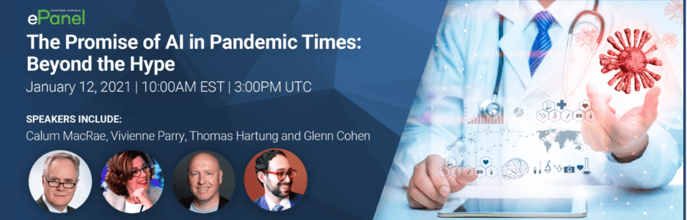
Our journey began in 2021, with an ePanel on The Promise of AI in Pandemic Times, which, for the first time, explored how AI can help to tackle global health challenges. Bringing together AI luminaries in medicine and public health, the event explored the technology in the context of the COVID-19 pandemic, in an effort to drive applications to positively impact global public health.
Watch the free recording On Demand
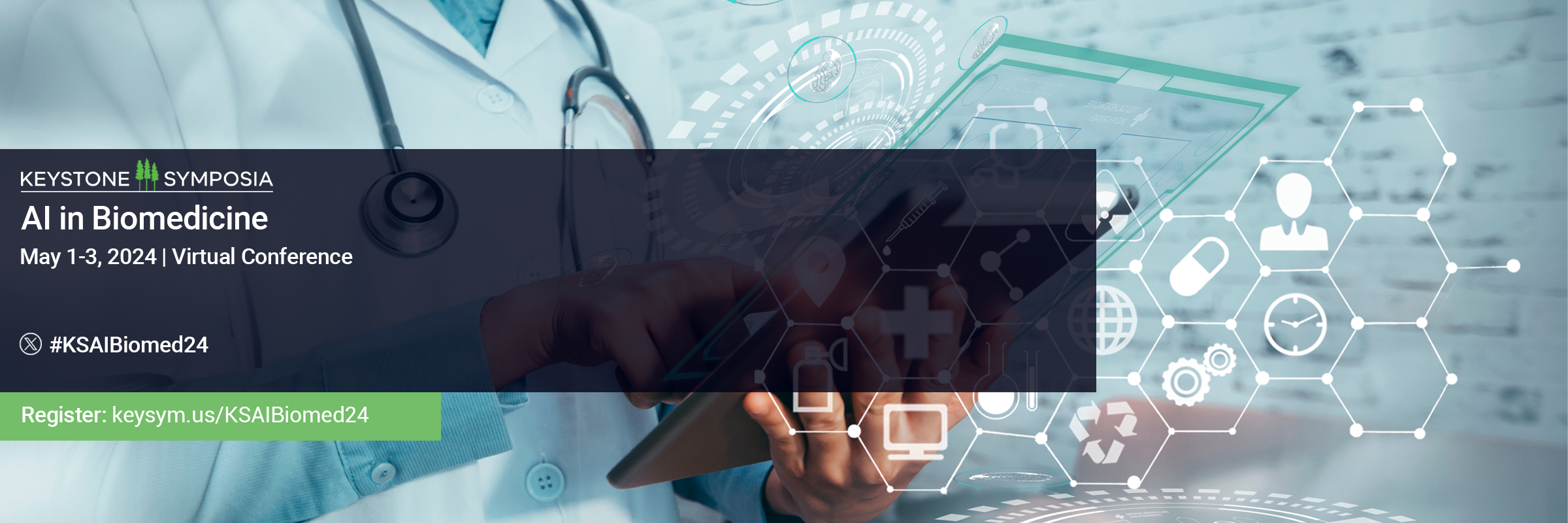
Following the inaugural ePanel, the AI in Biomedicine virtual meeting in 2024 marked the first full conference on this transformative new technology, coinciding with the increasing conversation and implementation of AI globally. Livestream and On Demand viewing options allowed audiences to tune in to discover cutting-edge applications of AI across diverse biomedical specialties, including oncology, neurology, cardiology, immunology, and genetics. Sessions highlighted real-world examples of how AI can address long-standing challenges in biomedicine through automated analysis of complex biomedical data – from enabling novel insights into disease mechanisms to providing earlier diagnosis, improved prognostics, and enhanced precision medicine. Alongside the science, the meeting facilitated discussions around responsible and ethical implementation of AI in biomedicine— a critical piece of the puzzle as researchers confront the powerful nature of these new approaches.
As the field gained momentum, we knew an in-person event would be needed to connect those developing AI tools with biologists trying to use them, to bridge the gap between theory and practice. Thus the 2025 AI in Molecular Biology conference was borne (available On-Demand until March 18). More than a forum for sharing knowledge, the event was designed to spark collaboration between AI and technology innovators and biomedical researchers by featuring speakers from both realms on the program. By attracting and uniting these communities, the conference aimed to catalyze bold, AI-driven, cross-disciplinary solutions that advance the understanding, prevention, detection, diagnosis, and treatment of disease. True to the Keystone Symposia mission and history, it wasn’t just about learning – it was about forging the connections needed to drive real impact on human health.
On September 15-18, 2025, attendees flocked to Santa Fe, New Mexico for this groundbreaking conference, including a unique demographic of attendees from beyond biomedical circles. Corporate leaders from Coca-Cola, OpenAI, Microsoft, the Chan Zuckerberg Initiative and other well-known tech innovators were drawn to the visionary nature of the program. It marked a first for the field: The first time representatives from such diverse companies and backgrounds came together to learn from each other about current trends, successes and challenges, while exploring opportunities to work together.
I thought the conference was really interesting as it brought together folks from disparate fields all trying to apply AI to their interests with varying degrees of success,” says Dr. Nathaniel Robichaud, PhD, Leading Scientific Partnerships at Nomic Bio. “It was a great opportunity to learn about where tools are successful and where gaps remain. Everyone seemed eager to learn, which was evident in the career round table, as many of the participants were established industry scientists just taking the extra opportunity to hear what others are working on."
Scientifically, the AI in Molecular Biology Keystone Symposia, co-organized by Drs. David R. Kelley and Jean Fan, provided a broad look at strategies for AI across diverse molecular biology and biomedical research applications, from genomics to imaging and beyond. Featuring a keynote from Nobel Laureate Dr. David Baker – the father of computational protein design – the program captured the state-of-the-art, while also looking towards future possibilities – equipping attendees with concrete strategies to accelerate their own scientific breakthroughs.
Purchase On Demand for scientific insights presented at the meeting!
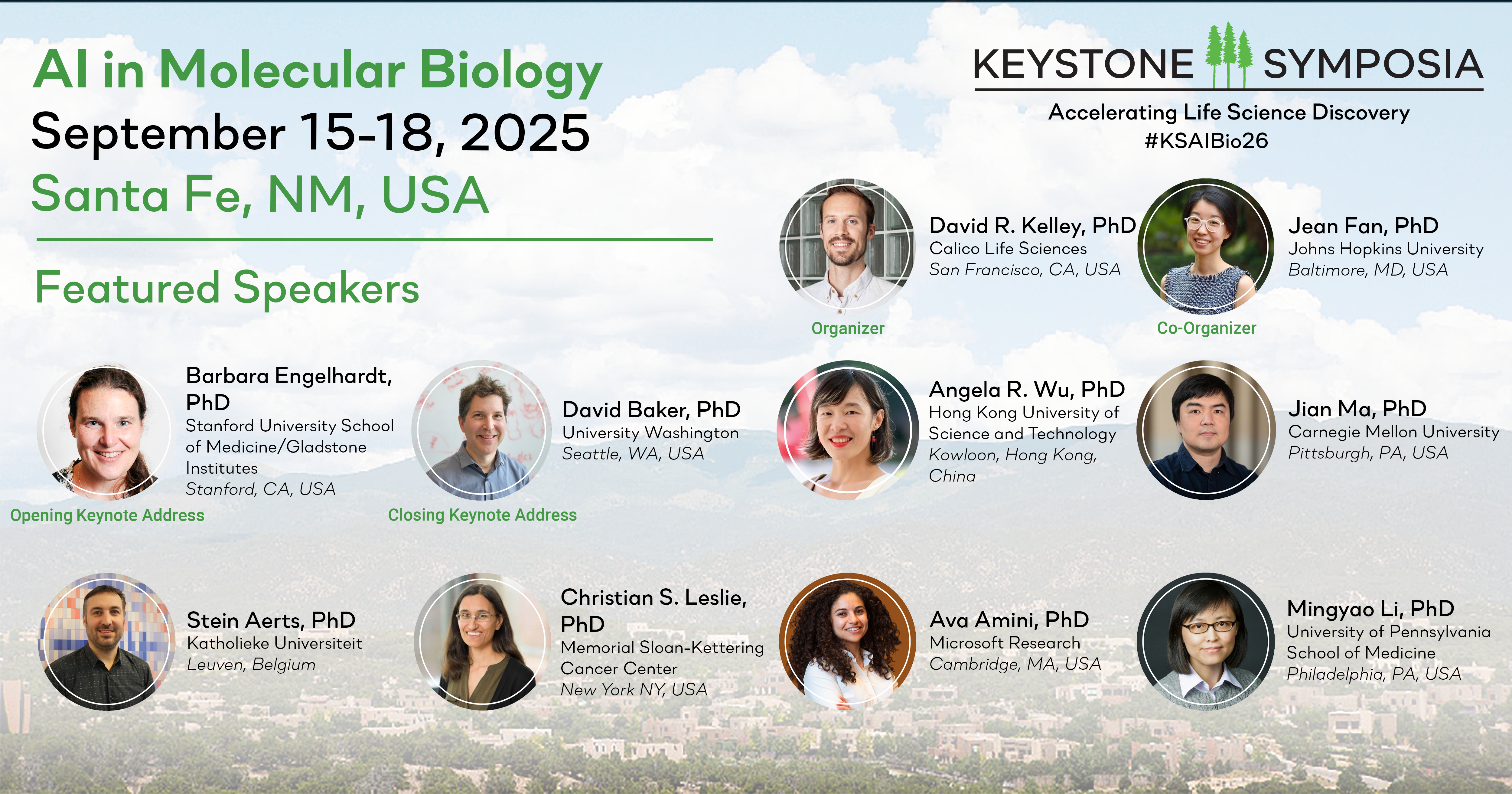
This first Keystone Symposia conference on AI in Molecular Biology convened researchers across computational and data sciences with biomedical scientists to feature numerous areas where AI is having immediate impacts in cell biology and medicine, including on protein structure prediction, making sense of complex systems biology datasets and interpreting imaging data from cells and clinical samples. The panel discussions, focused on technological innovation, responsible use of AI and academic-industry partnerships, highlighted the importance of dataset and model quality and the field’s unique opportunity for advanced scientific knowledge and human health in the coming years. Keystone Symposia looks forward to supporting this interdisciplinary community as it expands its impact across biomedical sciences,” says Keystone Symposia’s Chief Scientific Officer, Dr. Terry Sheppard, who was also in attendance at the event, having worked closely with the organizing team to realize this vision.
After three days of groundbreaking science, conference organizers wrapped up the outcomes of the meeting in their concluding remarks – commenting on advances made, cross-functional insights discovered and future directions to anticipate.
It is clear that this is a really key moment for the integration of AI into Biology. AI is the perfect tool for quantifying and predicting the messiness of biology, and you can see that throughout the talks. It is permeating so many areas; patterns and themes are emerging across these different areas, and there is a lot of useful cross-talk that is occurring,” says Dr. Kelley.
Many talks showed how you really benefit from thinking super carefully about the data, and bringing in exquisitely designed statistical models to drive careful conclusions. Other cases use a huge source of data and let the models rip to see what comes out. I am intrigued to see what emerges from these two different approaches. Clever biological intuition for model building is still alive, but we will see how that may change over the next few years, especially as the AI agents enter the scene to impart their own intuitions.”
Taking a big-picture view, Dr. Feng comments on new perspectives gained at the meeting:
We will all continue working on this intersection of AI and molecular biology, now guided by what we have learned over the past few days, including a new awareness for who our work may impact and the people that this work ultimately seeks to serve.”
Hear about the meeting from organizer Dr. David R. Kelly
Purchase On Demand Access for all the Insights!
Join us for the Next Exciting Chapter in AI at the Computational Advances in Drug Discovery Keystone Symposia
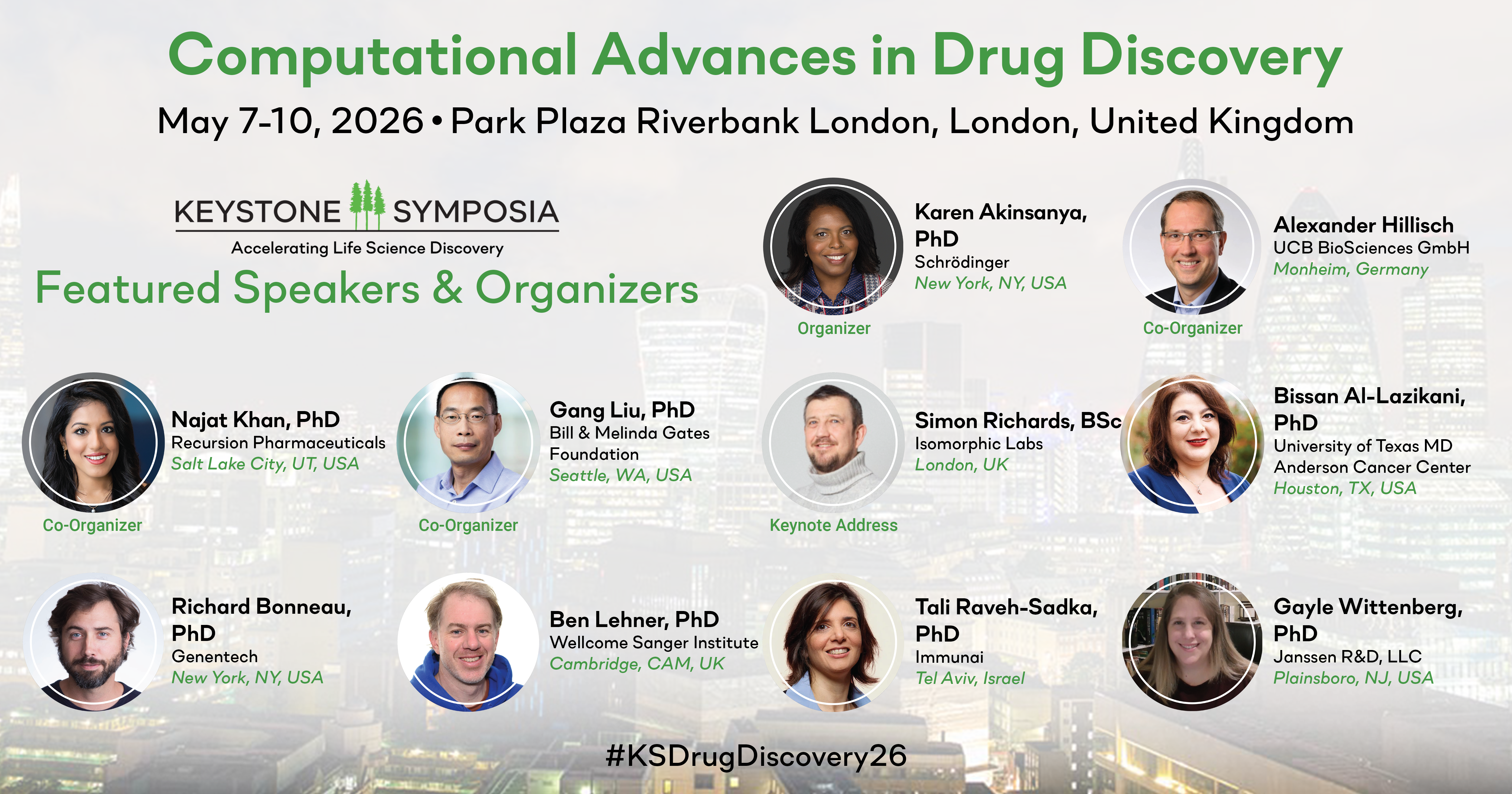
We will explore the next exciting chapter in this fast-paced AI series at the upcoming Computational Advances in Drug Discovery Keystone Symposia, in London, May 7-10, 2026 – available in-person, via Livestream and On Demand. At this landmark meeting, experts will reveal cutting-edge AI and machine learning approaches to compound and protein design, structure and interaction prediction, disease modeling, and predictive toxicology, demonstrating how these tools are transforming both early hypothesis generation and downstream therapeutic innovation.
AI and machine learning are transforming the landscape of pharmaceutical innovation at an unprecedented speed. Drug discovery has traditionally relied on slow, incremental experimentation which takes decades to progress from bench to bedside. But today, advanced computational methods are unlocking entirely new possibilities – enabling simulations at atomic, DNA, protein, and cellular and patient scales that are dramatically accelerating success by enabling faster, more precise and data-informed drug discovery strategies.
Spearheaded by field leaders Drs. Karen Akinsanya, Alexander Hillisch, Najat Khan, and Gang Liu, this meeting will offer a unique opportunity to hear directly from the teams building computational tools defining the next generation of therapeutics. The program features heavy-hitters driving industry implementation of AI spanning biotech start-ups to big-pharma, including Merck, Johnson & Johnson, Novartis, Genentech, Sanofi, Janssen, Scorpion Therapeutics, Absci, Eikon Therapeutics, Immunai, Recursion Pharmaceuticals and more. Attendees will gain an insider’s perspective on how AI is advancing target identification, generative molecular design, biomarker identification and more.
This forward-looking forum will help define the future of the field. Bringing together a multidisciplinary group of life science researchers, data scientists, innovators, and industry leaders, this conference will integrate diverse perspectives to drive innovation and impact. With the global AI-driven drug discovery market expected to grow to nearly $8 billion by 2030, this meeting offers the opportunity to upgrade AI strategies, stay ahead of the curve, explore new partnerships between academia and industry, seek VC investments, and envision new realities. Attendees will leave with the knowledge and connections to turn ideas into roadmaps for success in AI driven drug discovery.
Indeed, this has been the Keystone way for over 50 years now, bringing the biomedical ecosystem together across academic and industry siloes to drive translational impacts outside of the ivory tower. Now that the ecosystem has expanded to include greater technology and venture interests, we have expanded our table to bring in additional expertise and broader perspectives that facilitate biotechnology breakthroughs, and bring them to market. These are the players needed to take a great idea from a dream into a reality – from a concept into a true benefit to society – and you can find them all in London!
Join us for this landmark meeting in London, May 7-10, or via livestream or on demand options!
Keystone Symposia is committed to presenting world-class science as well as nurturing the next wave of scientific leaders. This meeting will offer:
- A Career Roundtable featuring seasoned experts from industry and academia
- Networking opportunities designed specifically for trainees and early career investigators
- Mentorship and guidance on navigating careers at the intersection of computation and biomedical research


.png)
newsletter
Celebrating Legacy & Embracing the Future: Chief Financial Officer Changing of the Guard
It is with deep gratitude and admiration that we congratulate Pam Daugherty, Chief Financial...
.jpeg)
science policy
Leading the Charge: SAB member Dr. Shruti Naik on Reimagining the Biomedical Funding Landscape
The Keystone Symposia Scientific Advisory Board (SAB) is a visionary group of thought-leaders...