
fellows
neurodegenerative disease
Genetics, Genomics & Microbiome
mentorship
Community
Bioengineering, Digital & Computational Biolog
genetics
By Emma Wabel
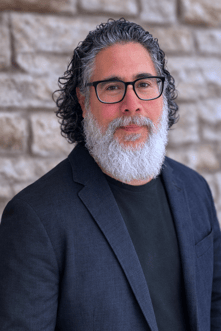
We are proud to feature Keystone Symposia Fellow Esteban Vazquez-Hidalgo, PhD, a Postdoctoral Scholar in the Department of Population and Quantitative Health Sciences at Case Western Reserve University's School of Medicine. Dr. Vazquez-Hidalgo studies how dual or mixed heritages contribute to neurodegenerative disease development.
"I became a scientist because science matters, but for me, I continue because the people matter more."
From Cosmic Curiosity to Computational Biology
For Vazquez-Hidalgo, the spark that ignited a life in science began not in a laboratory, but in front of a television set, with childhood reruns of Star Trek and the promise of space exploration. His love for science sprung from a fascination with the world outside of Earth and has served as a guiding force in his professional career.
Yet, Vazquez-Hidalgo's path to becoming a computational biologist was not a straight line. In 2008, he was attending community college and working in a pathology lab, planning to become a pathology assistant. Everything shifted when his biology instructor encouraged him to apply to Bridges to the Baccalaureate, an NIH-funded program that helps community college students transfer to four-year universities and finish bachelor's degrees in biomedical and behavioral sciences.
Upon acceptance into the program, Vazquez-Hidalgo met his first scientific mentor and discovered a passion that redirected his career trajectory. Exploring the world of computational science, he realized his future lay in pursuing a career where data mapping and human biology intersect.
Uncovering Genetic Clues in Admixed Communities
Today, Vazquez-Hidalgo focuses his research on the complex genetic drivers of Alzheimer’s disease, working to understand the role heritage plays in biased gene expression.
"There are 2 copies of each gene. Sometimes each copy is expressed equally. Sometimes they aren't.”
Vazquez-Hidalgo is specifically interested in this biased gene expression within admixed populations (groups whose genetic heritage traces back to two or more continents). By deciphering how ancestral genomic variations shape gene expression, his research lays the groundwork to better detect Alzheimer's in its early stages or even to develop personalized therapeutic approaches to treat the disease.
His drive to untangle the complexities of neurodegeneration stems from a balance of rigorous scientific curiosity and deep personal empathy. Having watched friends and family suffer through Alzheimer’s disease and other forms of dementia, he views his work as a direct response to human suffering. Equally vital to his mission is addressing the historical lack of representation in genetic research, ensuring that the communities most often left out of clinical datasets finally see themselves reflected in precision medicine.
Drawing Support from the Scientific Community
Through every stage of his academic and professional journey, Vazquez-Hidalgo has viewed the scientific community as an essential support system. Whether transitioning from community college or navigating post-doctoral challenges, academia's vast network of peers and mentors has helped him pilot complex shifts time after time.
Vazquez-Hidalgo's desire for connection naturally drew him to the Keystone Symposia Fellows Program. The fellowship provides a structured platform for postdocs and early-career scientists to build cross-institutional relationships, gain insight into scientific leadership, and connect with peers navigating similar career challenges. For Vazquez-Hidalgo, joining this network aligns with his belief that scientific progress thrives on collective encouragement.
"As my career advances, shifts, or pivots, I continue to look for that community of peers and mentors to help me navigate different paths.”
Lifting Others as He Climbs
Dedicated to advancing the scientific community, Vazquez-Hidalgo shares his findings nationally. He was recently invited to present his work on biased gene expression at the San Diego State University Biochemistry Seminar Series and at Northwestern University’s HEART-GeN Summer Program. Bolstering advocacy for peer support, he also submitted a professional workshop proposal for the SACNAS conference focused on helping researchers build communities through strategic networking.
Ultimately, Vazquez-Hidalgo measures the success of his career not just by data or publications, but by the tangible impact he leaves on the people around him. He strives to be an advocate for students who need someone in their corner, an example for early-career researchers who rarely see themselves represented in leadership spaces, and a bridge to communities seeking fair representation in scientific discovery. Through every initiative, Vazquez-Hidalgo continues to prove that when human connection leads the way, science becomes a powerful tool for transformation.
"Beyond the science, I hope to be someone people came to and left feeling helped.”
Connect with Dr. Vazquez-Hidalgo on LinkedIn!
Learn more about: Keystone Symposia Fellows Program



fellows
September Fellow's Spotlight on Dr. David Martinez
This month, we spotlight Keystone Symposia Fellow Dr. David R. Martinez, PhD, an assistant...

